Bee Nest Removal
Professional bee nest treatment across Sheffield, Rotherham, Chesterfield and surrounding areas.
Fast, friendly, responsible bee treatment service
Unlike with wasps and hornets, our approach to bees is not simply to exterminate the colony.
Our first priority is to manage the problem and remove the danger to you, while causing as little harm to the bees as reasonably possible.
Call The Wasp Fella on 07731 473876
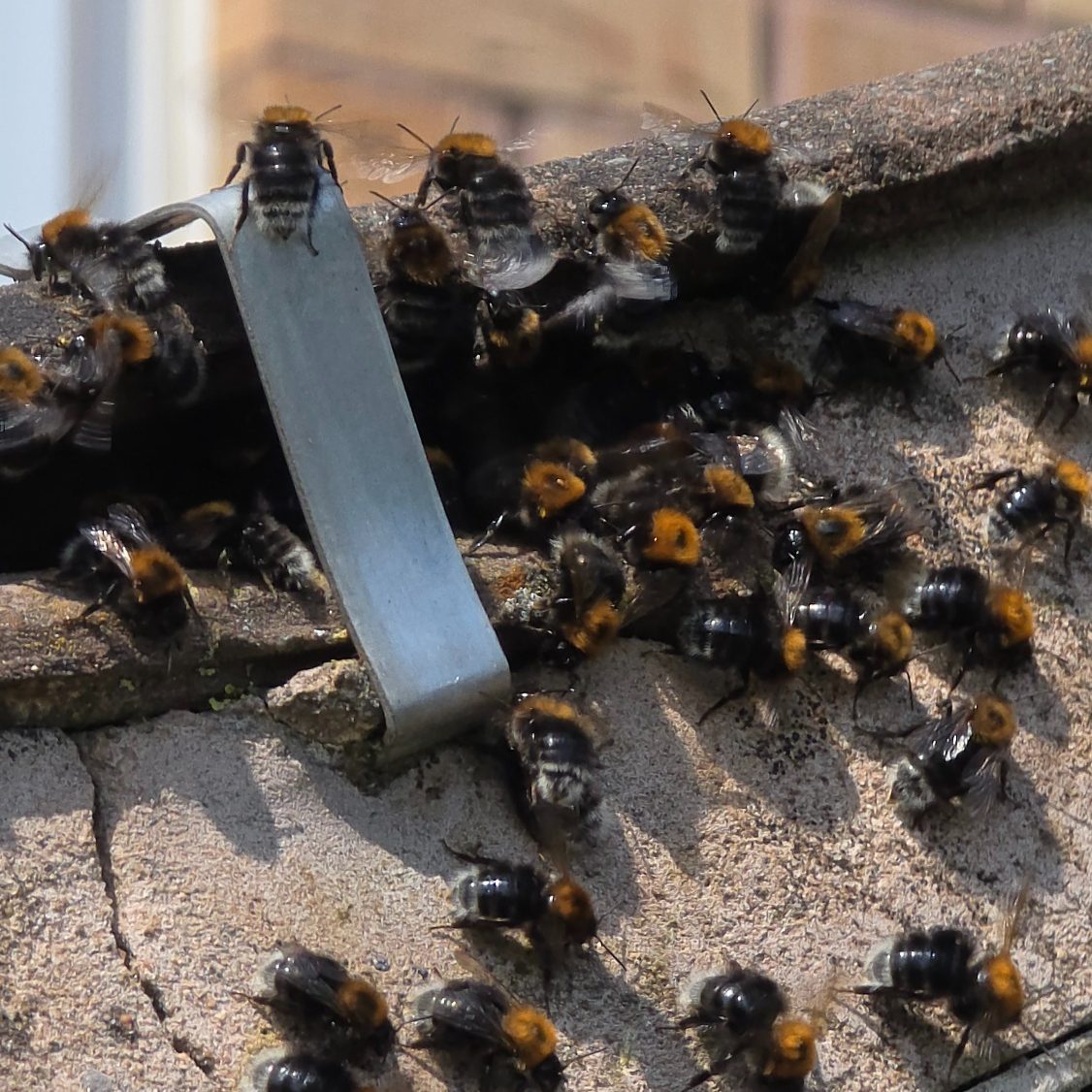
Professional bee control in the Sheffield area
In many situations, it may be possible to manage the colony until it naturally moves on. Where appropriate, we can also consider whether the nest can be relocated in a controlled and safe way.
However, if there is no practical alternative and an active bee nest presents a serious risk to people or property, treatment may be necessary. Where treatment of honeybees is required, there are specific requirements that must be followed. We will explain the options to you before any treatment is carried out.
Whether the nest is in a loft, roof space, wall cavity, shed, garage, garden or somewhere else around your property, we’ll assess the situation and recommend the most appropriate treatment.
How our bee nest treatment works
We'll establish what is happening and, where possible, identify the type of bee and the location of the nest.
Sometimes the nest itself is hidden inside a roof space, wall cavity or another inaccessible area. You don't necessarily need to be able to see the nest before calling us.
A steady stream of bees entering and leaving a small opening can be a good indication that a colony is established inside a building.
1. Assess the problem
2. Identify the bees
Not all bee nests need to be dealt with in the same way.
Honeybees can form large colonies and may establish nests inside roof spaces, wall cavities and other parts of buildings.
Bumblebees usually form much smaller colonies and may nest in places such as bird boxes, roof spaces, sheds, compost bins or other sheltered locations.
Solitary bees don't have a Queen and a workforce of thousands of workers. Each female generally creates and provisions her own nest for her offspring.
If you're unsure what type of bee you have, don't worry. We can identify the bees when we visit and advise you on the most appropriate course of action.
3. Take the appropriate action
If we can deal with the problem without killing the bees, that is our preference.
For Honeybees, this may involve obtaining the help of a local beekeeper where relocation is practical and appropriate.
Bumblebee nests can sometimes be moved safely when they are in an accessible outdoor location, such as a disused bird box.
If relocation isn't possible and there is a serious risk to your family, visitors or property, treatment may be necessary.
For Honeybees, particular care is required when treatment is undertaken. We will explain what is involved and any further work that may be required before proceeding.
4. Allow the nest to become inactive
After treatment, you may still see some activity for a period of time. This doesn't necessarily mean that the treatment has failed.
We'll explain what level of activity you should expect following treatment and what to do if you continue to see significant activity.
If the treated nest remains active, our 14-day guarantee provides for a follow-up treatment, subject to the guarantee terms.
Standard call-out: £85 + surcharge
Bee problems can be more difficult to deal with than wasp nests, so there is a surcharge over our standard call-out fee.
Bumblebees
If the problem is Bumblebees and we treat the nest, there is a £15 surcharge on top of our £85 call-out fee.
Total: £100
Honeybees
If the problem is Honeybees and treatment is required, there is a surcharge of at least £65 on top of our £85 call-out fee.
Total From £150
There may also be additional post-treatment costs associated with blocking the entrance or entrances to the nest where this is necessary.
Every bee problem is different, so we deal with bee nests on a case-by-case basis. We'll explain any additional work and costs before proceeding.
How much does bee nest removal cost?
Frequently Asked Questions
Can you come out the same day?
Same-day service is offered, subject to availability. Call 07731 473876 and we’ll let you know what appointments are available.
Do bee nests need to be physically removed?
Not necessarily.
Once an active bee nest has been successfully treated and the colony is inactive, the old nest generally does not need to be removed simply because it is there.
With Honeybees, there may be a need to block access to the nest to prevent other bees from gaining access to the remaining nest material.
There are circumstances where physical removal may be appropriate, particularly where the nest is accessible and its removal is practical.
We'll advise you on the best option for your particular situation.
What if I can’t find the bee nest?
Don't worry.
It's quite common to see bees entering a building without being able to locate the actual nest.
With Honeybees, you may also be seeing the remnants of a swarm that has already moved on.
We'll investigate where the bees are entering and leaving and, where possible, establish what is happening.
You don't need to find the nest yourself before calling us.
Can you treat bee nests in lofts and roof spaces?
Yes.
Lofts and roof spaces are common locations for bee nests.
Bees may enter through gaps around eaves, under roof tiles, behind soffits or through other openings and establish a nest somewhere inside the roof space.
If you suspect you have a nest in your loft, avoid disturbing it and tell us where you've noticed the activity.
We'll assess the situation and advise you on the appropriate course of action.
Can you treat a bee nest inside a wall?
Yes, depending on the circumstances.
A steady stream of bees entering and leaving a small hole, crack, air brick or other opening can indicate that a colony has established a nest inside a wall cavity.
Do not seal the entrance while the nest is active.
Blocking the entrance can cause bees to look for another way out and may result in them finding a route into another part of the property.
We'll assess the situation and advise you on the appropriate treatment.
How quickly will the bees disappear?
The time taken for bee activity to reduce varies according to the location and size of the nest and the circumstances of the treatment.
You may continue to see some bees after treatment while the treatment takes effect. This is not necessarily a sign that it has failed.
We'll explain what you should expect when we visit.
If the treated nest remains active, our 14-day guarantee provides for a follow-up treatment, subject to the guarantee terms.
Should I remove a bee nest myself?
We don't recommend disturbing an active bee nest yourself.
A nest can contain a large number of bees — potentially a few thousand in the case of Honeybees — and disturbing the colony can cause the bees to defend themselves.
This is particularly important if the nest is high up, inside a roof or wall, or close to doors and other areas where people regularly pass.
If you're unsure whether you have an active nest, give us a call for advice.
Will bees come back to the same nest?
A successfully treated nest should become inactive.
However, if a Honeybee colony has established itself inside a building and produced honey or other nest material, the site can remain attractive to other bees.
For this reason, it may be necessary to block the entrance to the old nest after treatment.
We'll advise you if this is necessary and explain what additional work is recommended.
Sheffield areas we cover
The Wasp Fella provides bee nest treatment throughout Sheffield and surrounding areas.
We cover residential and other properties across Sheffield, including areas such as:
Woodhouse · Woodhouse Mill · Beighton · Handsworth · Crystal Peaks · Mosborough · Halfway · Darnall · Attercliffe · Intake · Gleadless · Frecheville · Hackenthorpe · Ecclesfield · Hillsborough · Crookes · Walkley · Ecclesall · Sharrow · Broomhill · Fulwood · Dore and surrounding areas.
We also cover Rotherham, Chesterfield and other nearby areas across South Yorkshire, North Derbyshire and North Nottinghamshire.
If you’re unsure whether you’re within our service area, simply give us a call.
Need a bee nest treated in Sheffield?
If you have bees nesting in your loft, roof, wall, bird box or another part of your property, don't disturb the nest or block the entrance.
Call The Wasp Fella today on: 07731 473876
We'll establish what you're dealing with and explain the options available to you.